Ordering a trike? Measure the gate, the hallway and the car before you buy
A tape measure, a route walked twice and an honest look at the car will tell you more about living with an adult trike than any spec sheet.
Choosing stable pedal and pedal-assist cycles for adults whose balance on two wheels has become unreliable, including delta and tadpole trikes, low-step frames and semi-recumbents
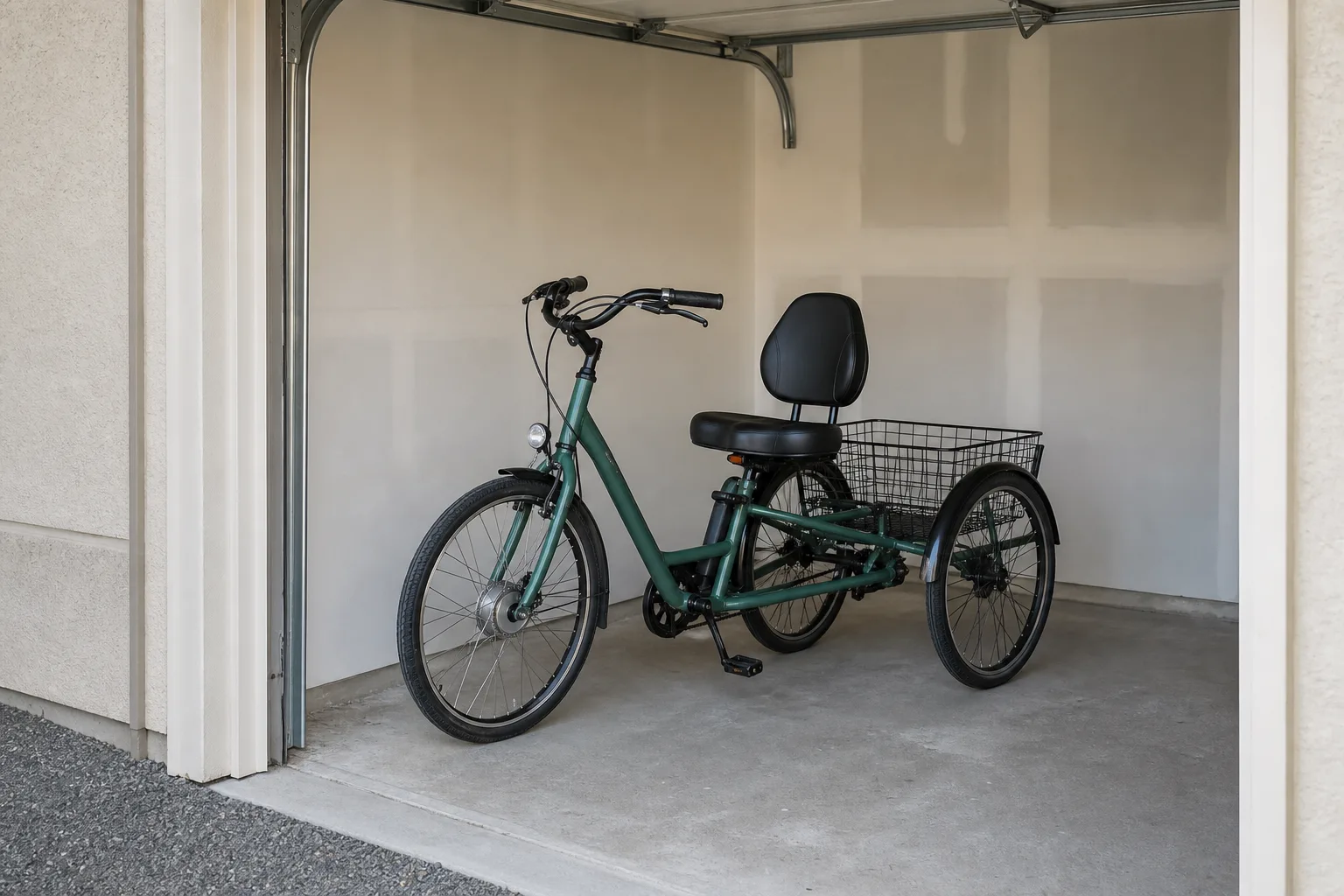
A trike's widest point is usually the rear axle or the wheel nuts, well below the height of a doorway handle. Measure openings low down, where the machine will actually pass.
A three-wheeled cycle that rides beautifully and cannot get past the side gate is a very expensive garden ornament. The failure is common enough that dealers ask about it before they ask about gearing, because a trike is roughly twice as wide as the two-wheeler it replaces, and the width falls in the last three feet of the machine, where nobody thinks to look. The riding decision and the storage decision are separate problems that arrive on the same delivery day. The second one is easier to solve in advance, with a tape measure and an hour.
1. Measure the narrowest point on the route, not the widest door
Walk the whole path from the curb to wherever the machine will sleep, and write down the tightest measurement on it, whether that is a gate post, a hallway with a radiator on one wall, a garage door track that narrows the opening below the frame size, or an elevator car with a handrail eating two inches on each side. Most delta and tadpole trikes for adults sit somewhere near 30 to 34 inches across the axle, and some touring models run wider. Measure at hub height, not at head height. Then subtract an inch for your knuckles.
2. Ask what the folded dimensions actually are, in all three directions
Folding trikes fold, but they rarely fold small. A hinge in the main tube shortens the machine and drops the seat, and on some designs the rear wheels swing inward; on others they do not move at all, which means the width you measured stays the width you live with. Ask the dealer for folded length, width and height as three separate numbers, taken with the seat and any rear rack in place, and ask how many pounds you have to lift or pivot to reach that state. A fold that takes two hands and a knee is a fold you will stop using by March.
3. Plan the car problem before the trike arrives
An electric trike in the 70 to 100 pound range is beyond most trunk-mounted racks and beyond a lot of hitch racks too, since the published weight limit per bike is often 60 pounds and the tray is built for a two-wheeled footprint. The workable answers are a heavy-duty platform rack rated for the actual weight with the battery removed, a hitch-mounted cargo carrier or small trailer, or a minivan or cargo van with the seats out and a folding ramp. Weigh the machine as you would carry it, battery out, and compare that number to the hitch class on the vehicle.
4. Store it where you can reach it without moving three other things
A trike parked behind the lawnmower gets ridden on the days when moving the lawnmower feels easy, which is not many days. Give it a bay with a straight run to the door, a floor that is level enough that it will not roll, and enough clearance on one side to swing a leg over or drop into the seat indoors, out of the weather. Shed floors that slope toward a drain will need a wheel chock or a parking brake you trust. A wide, cheap threshold ramp over a garage lip does more for daily use than most accessories.
5. Charge the battery somewhere heated, dry and in sight
Lithium packs charge poorly below freezing and some chargers will refuse the job entirely, so the coldest corner of an unheated shed is the wrong place, both for capacity and for pack life. The better routine is to take the battery off the machine, carry it inside, and charge it on a hard surface away from the exit path, then carry it back out warm. The Consumer Product Safety Commission oversees safety standards for e-bike batteries and chargers, and its guidance runs toward using the charger supplied with the machine and not leaving a pack charging unattended overnight. Check whether the battery is removable before you order; not all are.
The measurements that matter are all free to take. Gate post to gate post, elevator door width, garage opening at hub height, hitch class, and the distance from the charging outlet to the nearest doorway. Take them before the deposit, bring them to the dealer, and let the numbers narrow the list.
The two-inch margin
Clearance equal to the trike's exact width is not clearance at all, because hands and grips sit outside the frame. Allow at least an inch on each side before calling a gate passable.