Trike heavier than you expected? What to check on the motor, gearing and brakes
Hub or mid-drive, why range figures overstate what a trike will do, and why the bottom gear and the parking brake deserve more attention than motor wattage.
Choosing stable pedal and pedal-assist cycles for adults whose balance on two wheels has become unreliable, including delta and tadpole trikes, low-step frames and semi-recumbents
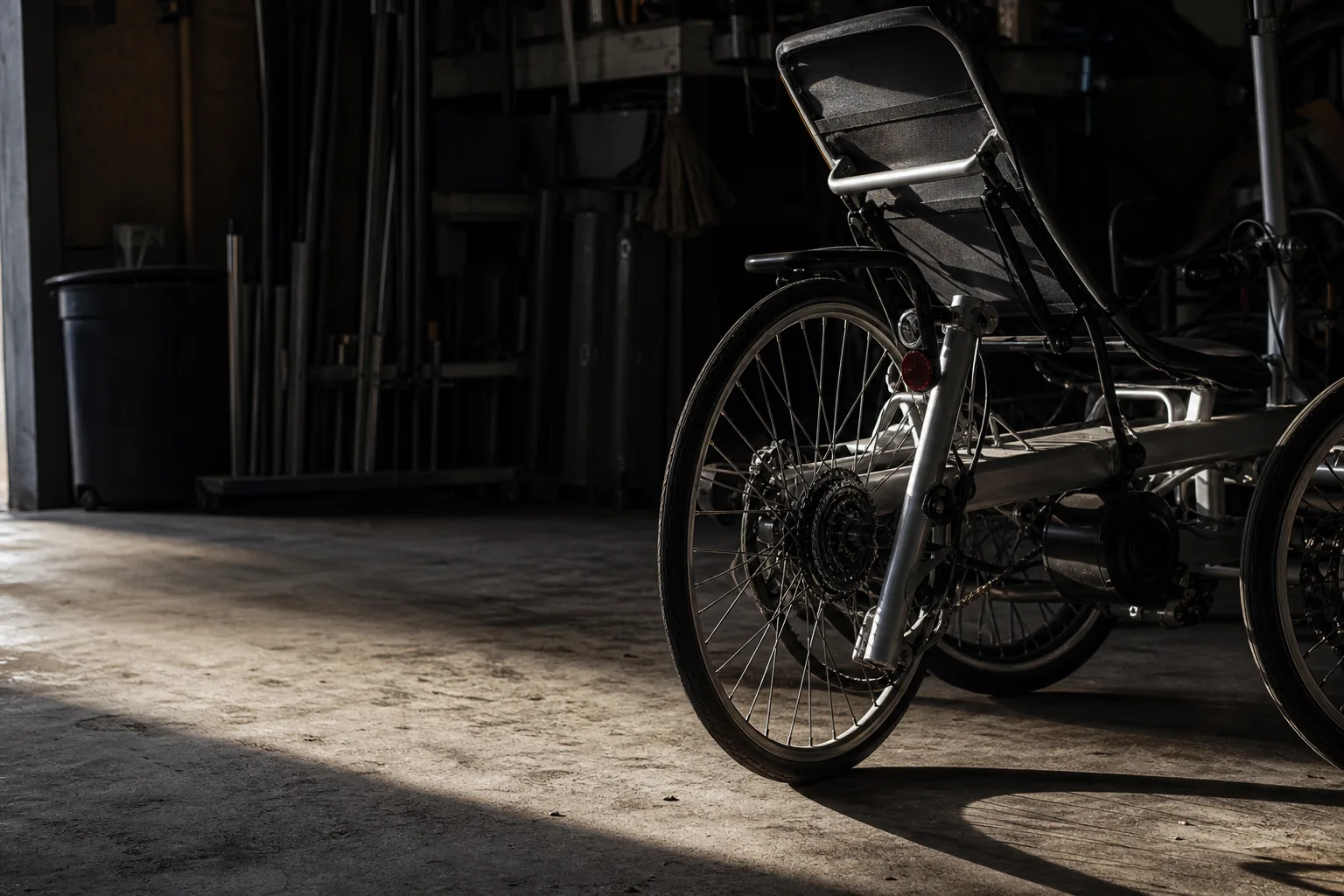
A trike's shipping weight rarely includes the rack, basket, battery and fenders most buyers keep. Ask for the machine to be weighed exactly as you would ride it home.
A cargo-capable delta trike with a 500-watt rear hub motor, a steel frame, a rack, a basket and a 48-volt battery came off the dealer's scale at a little over ninety pounds, which is roughly three times what the rider had been pushing around on her old step-through. Nothing on the box mentioned that. The weight is not a flaw, since it buys the stability she came for, but it changes what every other number on the sheet means: the motor works harder, the brakes work harder, the bottom gear matters more, and the range figure printed on the tag stops describing her rides.
Hub or mid-drive, and what each one does with a heavy frame
On a delta trike the hub motor usually drives one rear wheel, which is simple, cheap to replace and unbothered by chain wear, but it also delivers all its help at whatever speed the wheel happens to be turning. Push a ninety-pound machine up a driveway at walking pace and the hub is working outside its efficient band, drawing current and making heat. A mid-drive feeds through the same cassette the pedals use, so dropping into a low gear multiplies the motor's torque along with your own. The careful reader asks which wheel is driven, whether a differential is fitted, and what happens on a grade at three miles an hour.
Tadpole trikes and semi-recumbents complicate that further, because the single rear wheel carries less weight than the pair up front, and a hub in it can slip on wet leaves or loose gravel when torque comes on suddenly. Mid-drives on those layouts run long chains over idlers and eat chainrings faster than an upright bike does. Neither answer is wrong. What matters is matching the drive to the terrain outside your own door, and to whether you would rather replace a chain every season or a wheel every few years.
Why the range figure is optimistic on three wheels
Manufacturer range numbers are generally produced on flat ground, in still air, with a light rider on the lowest assist setting. A trike breaks all four assumptions at once. Three contact patches roll with more resistance than two, the tires are often wider and run at lower pressure for comfort, the frame and battery add fifty or more pounds of dead weight to accelerate at every stop sign, and the seating position on a recumbent puts your legs into a different, sometimes weaker, part of their range. A quoted forty miles can become fifteen to twenty in hilly suburbs, and that is not a defect.
The useful check is watt-hours rather than miles: multiply the battery's volts by its amp-hours and compare that figure across models, since it is the only honest common denominator. Then ask the dealer to let you ride the specific hill you dread, watching the battery gauge before and after. Two riders on the same trike will get different answers, which is why the number on the tag is a starting point rather than a promise, and why a second battery is often the cheaper fix.
A low bottom gear beats a bigger motor
Wattage is the number sales copy leads with, and it is the least informative one on a heavy trike. What gets ninety pounds and a rider up a ten percent grade without stalling is gear range: an internally geared hub with a wide spread, or a cassette with a large rear cog paired to a small chainring. On a mid-drive that low gear also multiplies motor torque. On a hub-driven trike it lets you contribute meaningfully when the motor is already at its limit, which is the difference between finishing the climb and walking beside the machine. Ask for the smallest gear inches available, and try it loaded.
Parking brakes and rear wheels that stop independently
A trike does not lean against a wall, and it will roll away from you on a slope while you are getting on or unloading groceries, so a lockable parking brake, usually a lever with a detent on one brake, is not an accessory. The Consumer Product Safety Commission is responsible for bicycle brake requirements in the United States, and hydraulic discs have become common on heavier machines for good reason. On deltas, check whether both rear wheels are braked or only one, since a single braked wheel can pull the trike sideways under hard stops.
Bring a scale to the dealer, or ask them to weigh the trike as configured with rack, battery and basket. Every judgment above follows from that one number.
Watt-hours over miles
Volts multiplied by amp-hours gives a battery figure that can be compared honestly across brands. Advertised mileage cannot, because no two makers test the same way.