Balance gone unreliable on two wheels? What a third wheel fixes, and what it charges you for
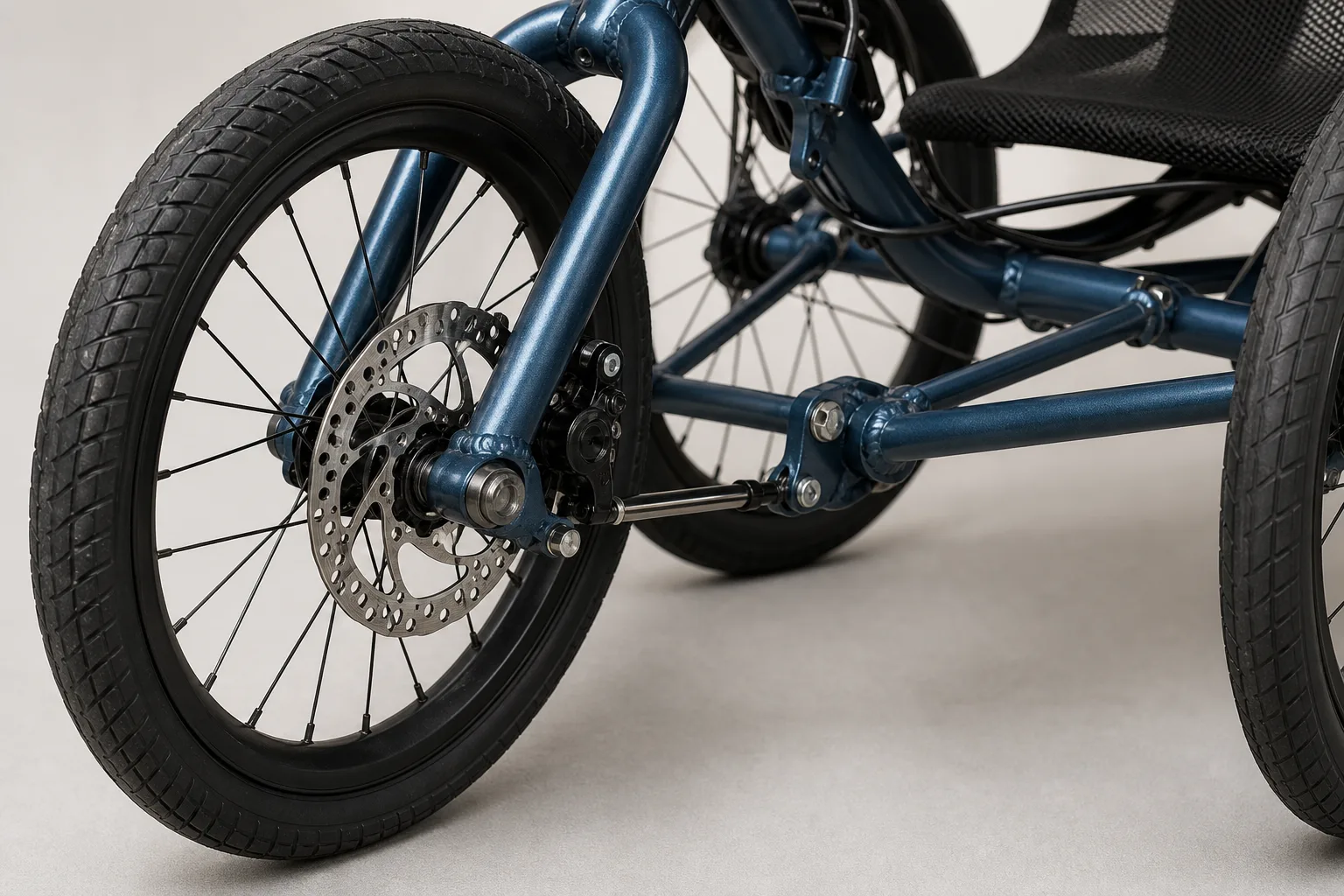
Most riders give up two wheels not after a crash but after repeated near-topples at a standstill. A trike removes that failure point entirely because it stays upright with both feet on the pedals.
A trike removes the standing start and the stop-line dab, then hands back cornering, camber and width as new problems to learn.
Casa Poema
The moment that ends most two-wheel riding careers is not a crash. It is the stop: the rider comes to a light, puts a foot down, and the bike goes over sideways at walking pace because the foot arrived late or landed on gravel. Riders describe it the same way over and over, a slow topple with nothing to grab. A third wheel deletes that moment completely, which is why the question gets asked at all. What it does not do is leave the rest of the ride unchanged, and the changes arrive in the first mile.
The three things a trike genuinely removes
Standing starts go first. On a trike you sit down, get both feet on the pedals, and roll away without the wobble that a two-wheeler needs at low speed to stay upright. Stopping goes second: you brake, you stop, you stay stopped, and you can sit at a red light with a bag of groceries in the basket and both hands off the bars. Third, and least talked about, uneven surfaces stop being a balance event. A driveway lip, a gravel shoulder, wet leaves in a gutter, a manhole cover set an inch low. On two wheels those are steering corrections. On three they are just bumps.
That is the whole case, and for many riders it is enough on its own. The follow-on effects are practical rather than dramatic. People who had stopped riding start riding again on errands rather than only on trails, because the stop-and-go of a neighborhood no longer costs anything. The Consumer Product Safety Commission oversees the safety standards that pedal cycles and their electric variants are built to in the United States, and the three-wheel category sits inside that same framework rather than off to one side of it.
What the third wheel hands back to you
Cornering is the first surprise. A two-wheeler leans into a turn and the rider's weight stays over the contact patch; a trike does not lean, so the same corner at the same speed pushes the rider outward and lifts the inside rear wheel. Nobody warns you about this at the dealer, and the first time it happens on a downhill turn it is memorable. Road camber does the same thing more quietly, tugging the machine toward the gutter on a crowned street so that you steer against it continuously. Width is the third: roughly thirty to thirty-five inches across the axle on most delta models, which is wider than a bollard gap, wider than some sidewalk chicanes, and wider than the space between a parked car and a bike lane stripe.
None of these are unsolvable. They are learnable in a few weeks, and the fixes are the ordinary ones: slow before the corner rather than in it, keep the speed down on off-camber descents, and pick routes with the trike's width in mind the way a van driver picks routes with a van's width in mind. What changes is that the skill demand moves from balance, which was failing, to judgment, which usually is not.
Delta, tadpole and semi-recumbent on a real street
A delta, one wheel forward and two behind, is the upright shopping trike most people picture. You sit high, you see over car roofs, and traffic sees you. It turns tightly, it takes a rear basket that swallows a week of groceries, and it is the layout most often sold as an electric tricycle for adults because the riding position matches what a rider already knows. It is also the layout most eager to lift a wheel in a fast turn, since the mass sits high and the front wheel does the steering alone.
A tadpole reverses that: two wheels ahead, one behind, seat low and reclined. It corners far more securely because the weight sits inside the wide front track, and it is genuinely fast on open road. The cost is eye height. At a driveway you are below the sightline of a driver looking left, so a flag and daylight running lights stop being accessories. A semi-recumbent splits the difference, seat lower than a delta and backrest angled, feet forward rather than beneath. It is the easiest of the three to get on and off, which matters more than it sounds when hips and knees are the reason the two-wheeler went away.
What the decision actually costs
Money is the visible part, and pedal-assist trikes generally run well above comparable two-wheel bikes because the frame is longer, the drivetrain is more complicated, and the volumes are smaller. Assume the battery is a consumable with a replacement cost you should ask about before buying, not after. The less visible costs are space and access: a trike will not stand against a wall, will not fit most standard bike racks, and needs a straight path through a doorway wide enough for the axle. Then route cost. Some paths you used to take are simply too narrow, and you will find that out by trying. Riders who plan for those three things ahead of time tend to keep riding.
The honest summary is that a third wheel trades one problem for a smaller and more predictable one. Balance was failing without warning; cornering, camber and width behave the same way every single time, which makes them something a rider can actually get on top of.
- 01
Axle width in inches
Adult trikes commonly measure around thirty to thirty-five inches across the rear axle. Measure your doorways, garage aisle and any path bollards before you buy rather than after delivery.
- 02
Wheel lift in turns
A trike cannot lean, so a fast corner loads the outside wheels and can unweight the inside rear. Slowing before the turn instead of during it is the fix riders learn first.
- 03
Road crown pull
Most streets are crowned to shed water, and a rigid three-wheel frame follows that slope toward the gutter. You steer lightly against it the whole ride, which feels odd for a week and then stops registering.